Strength Training Equipment & Setups
Functional Trainer Configurations: Space, Noise & Setup
27th Feb•11 min read
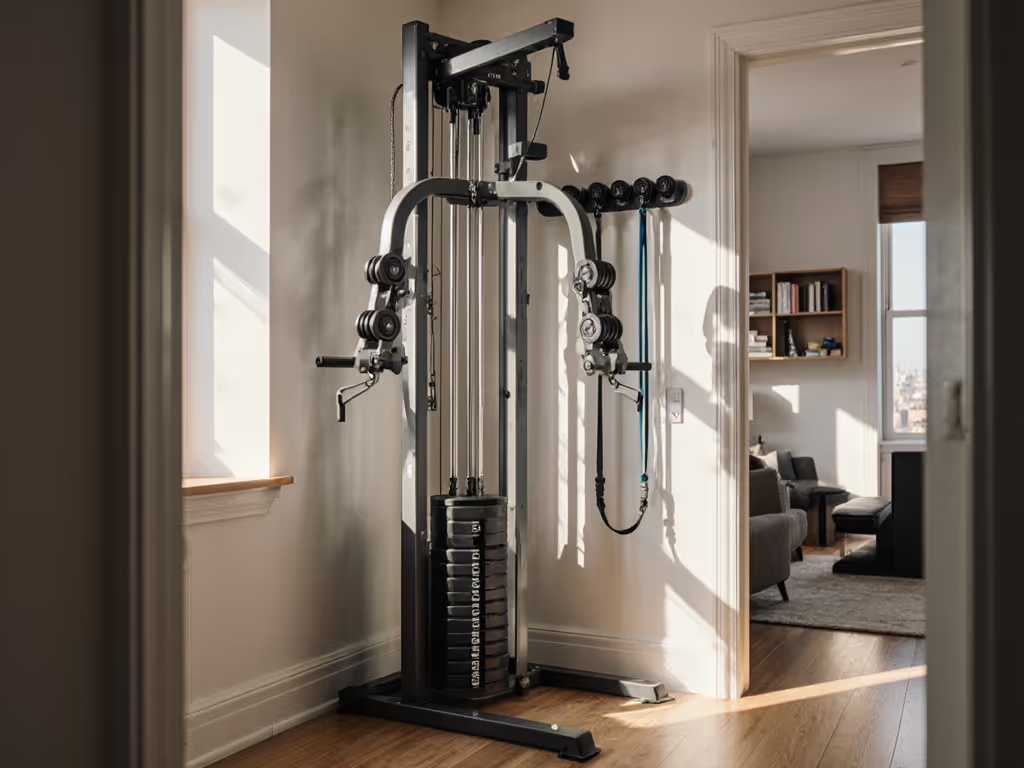
Single stack functional trainer comparison doesn't have to mean hunting across three brand sites at midnight. Instead, think of it as finding the piece of equipment that (once installed) becomes so frictionless to use that you actually reach for it consistently, day after day. Space-efficient cable machine comparison is really about matching your room's constraints to a trainer that serves your goals without dominating your space.
I learned this during lockdown when I helped my parents swap their bulky gym-in-a-closet phase for something quieter and smarter. We landed on a resistance-band mat setup that lived in a basket and vanished after each session. No neighbor complaints, no guilt about clutter (just five consistent days a week). That's the mindset I bring here: equipment that lowers friction daily wins over gear that looks impressive but sits unused.
Let me walk you through how to compare single-stack trainers like a coach, not a spec-sheet reader.
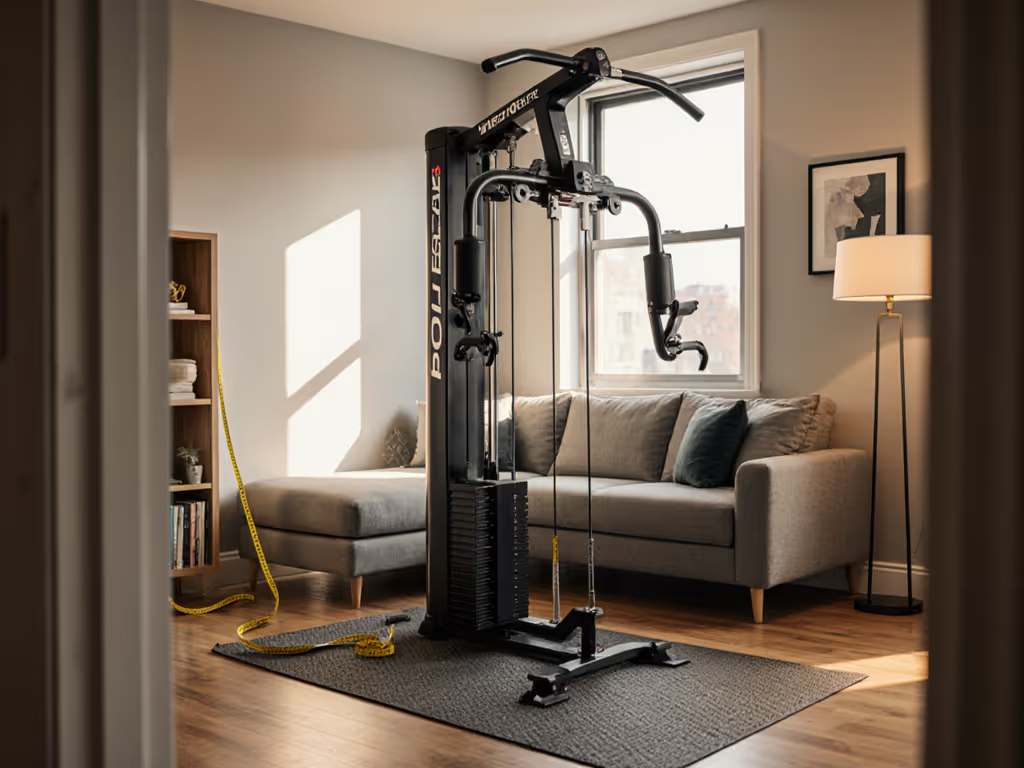
Most apartment and suburban home gyms have a hard ceiling on space. A standalone cable tower grabs 80+ square feet of floor. A standalone functional trainer doubles that footprint. But a single-stack cable attachment (one that mounts inside or alongside a power rack) collapses that footprint while keeping cable exercises in your toolkit. If apartment neighbors are a concern, use our apartment gym noise control guide to plan quiet hours, flooring, and equipment tweaks.
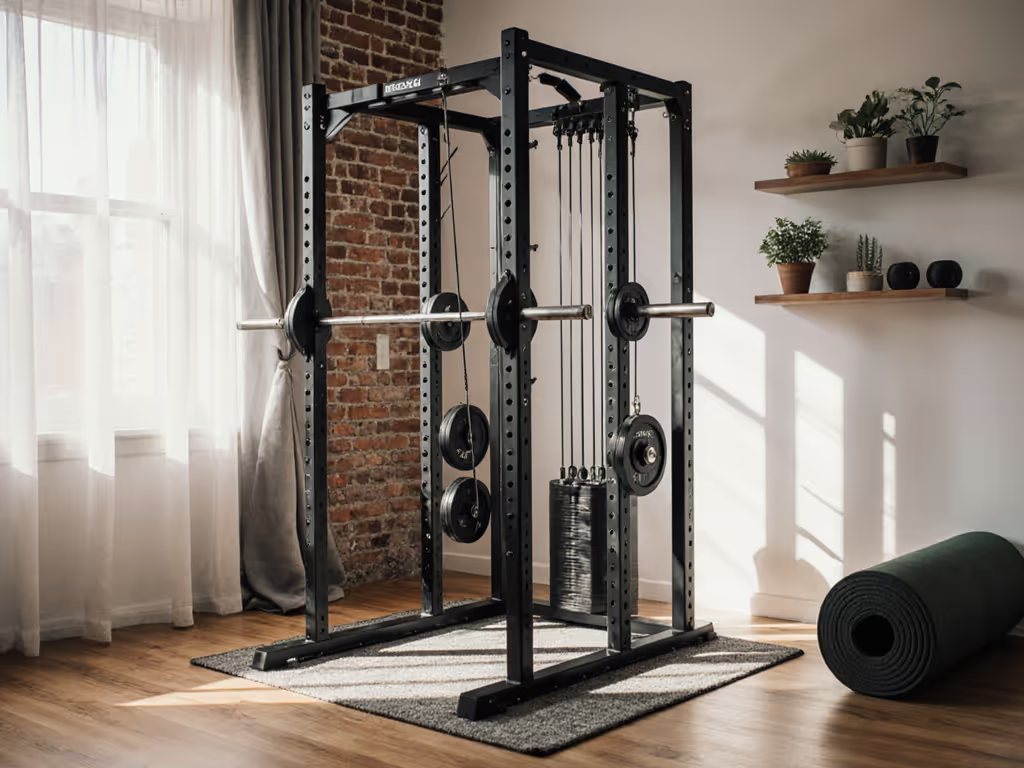
The REP Ares 2.0, for example, attaches to an existing PR-4000 or PR-5000 power rack, meaning you're not buying standalone equipment; you're leveraging infrastructure you (or neighbors) already have.
Single-stack trainers also tend to generate less cable rattle and weight-stack clang than their dual-stack cousins. For shared walls or light-sleeper households, that's not a minor detail, it's the difference between training at 6 a.m. and not training at all.
Before comparing specs, know your constraints.
This isn't overthinking; this is hide it to use it in practice. A trainer that's awkwardly positioned or requires a 15-minute setup ritual won't become habit. If your floor is the weak link, compare options in our home gym flooring guide tested for sound and shock.
Not all single-stack trainers feel the same. The mechanical ratio (how the cable and pulleys reduce or multiply load) affects the feel of every rep.
The REP Ares 2.0 uses a 2:1 cable ratio, meaning the weight stack feels half its listed value. So its dual 260lb stacks (upgradeable to 310lbs each) translate to a 130lb or 155lb feel per hand. That's a huge difference in versatility: you can start beginners light and scale continuously without jumping in 10lb chunks.
Supporting Keywords in Practice:
REP Ares 2.0 space requirements are compact because the weight stacks sit behind the rack, not in front. That frees up the space where you'd normally place a bench or squat inside the rack.
For Bells of Steel and Titan Fitness single-stack options (which will require comparison research on their sites), ask:
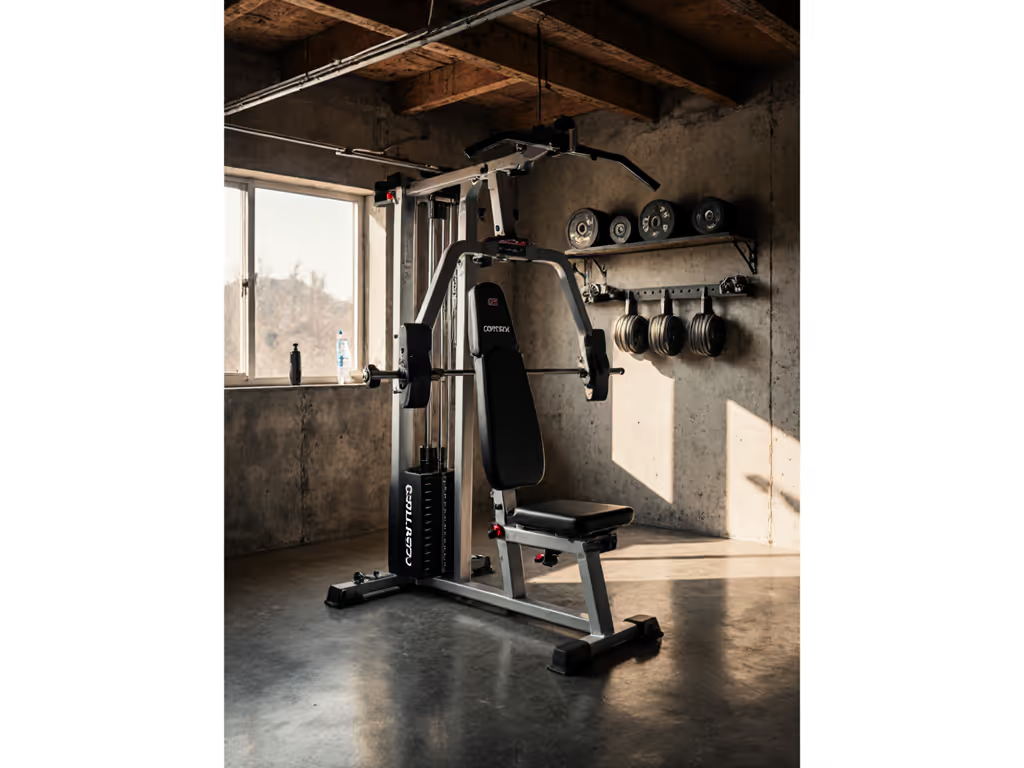
The best trainer on paper might be 6 feet deep, eating half your garage. Or it might sit wide, blocking your door path. Noise profiles matter too, and cable machines with plastic-lined trolleys (like the Ares 2.0) are quieter than bare metal on metal.
REP Ares 2.0 space requirements sum to a width of 57.6", added depth of 6", and height of either 82.1" (80" config) or 93.9" (93" config). That means if you own an 80" tall PR-5000 rack, the Ares 2.0 sits inside it with minimal added footprint beyond your existing rack.
Compare that to Bells of Steel and Titan options by asking for actual added footprint (not just the machine's standalone dimensions).
Noise Etiquette Tip: Test or verify that all cable movement uses smooth plastic linings (not bare steel on steel). Even a $50 cable mat under the trainer can drop perceived noise by 10-15 decibels. That's the difference between "Can I train before 8 a.m.?" and "Maybe not."
Where single-stack trainers excel is unilateral work (one-arm at a time). This is crucial for addressing imbalances and building stability.
The REP Ares 2.0 includes lat pulldown and seated row stations with swiveling pulleys, which allow unilateral pulls. Its improved footplate design is angled and wider than the original, centering your feet for better positioning during both bilateral (two-arm) and unilateral movements. Two athletes can train simultaneously on independent stacks, or a single athlete can superset between left and right without changing weight. To get the most from cable work, use our functional trainer programming guide with sample strength and hypertrophy plans.
When comparing Bells of Steel and Titan options, confirm:
If a trainer limits you to 8 exercises, you'll plateau and get bored. Variety (and the feeling of progress through exercise rotation) keeps habit alive. The Ares 2.0 supports bicep curls, tricep extensions, chest flies, rear delt flies, lateral raises, wood chops, and face pulls. That's breadth without requiring a second piece of equipment.
Consistency beats complexity, especially for home gym training. A trainer you can set up in 60 seconds will outperform a "better" trainer that requires 10 minutes of adjustment.
Footprint & Noise:
Load & Feel:
Exercise Range:
Practical Fit:
Once you choose a trainer, design a 30-second setup and breakdown:
This ritual is your consistency engine. Small wins compound when your space lowers friction daily.
You now have a framework. Here's what to do this week:
Day 1: Gather Specs Visit the brand websites for REP Ares 2.0, Bells of Steel's single-stack trainer, and Titan Fitness's comparable model. Use your Comparison Checklist to fill in every blank. Note gaps or missing details.
Day 2-3: Watch Reviews & Measure Find YouTube reviews (especially those testing noise in quiet rooms). Compare video demos to your room's dimensions using a laser measure or smartphone app.
Day 4: Narrow to Two Finalists Score each trainer on Footprint, Load & Feel, Exercise Range, and Practical Fit. Pick the top two that align with your space and noise window.
Day 5: Confirm Compatibility Email the brand's support team with your rack model and one specific question: "Will this trainer fit my setup with room for a bench?" Fast response = good support.
Day 6-7: Make the Call Review your Actionable Next Step notes. Commit to the trainer that lowers friction most, not the one with the flashiest specs. Place your order with confidence.
Remember: consistency beats complexity. The single-stack trainer you buy will only matter if it fits your space, respects your noise constraints, and gets used. Everything else is detail. Choose the one that, once in place, invites you to train every morning without friction. That's how small wins compound into unstoppable habit.