Training & Programming with Limited Equipment
Posture Home Gym Setup: Step-by-Step Desk Fixes
24th Apr•6 min read
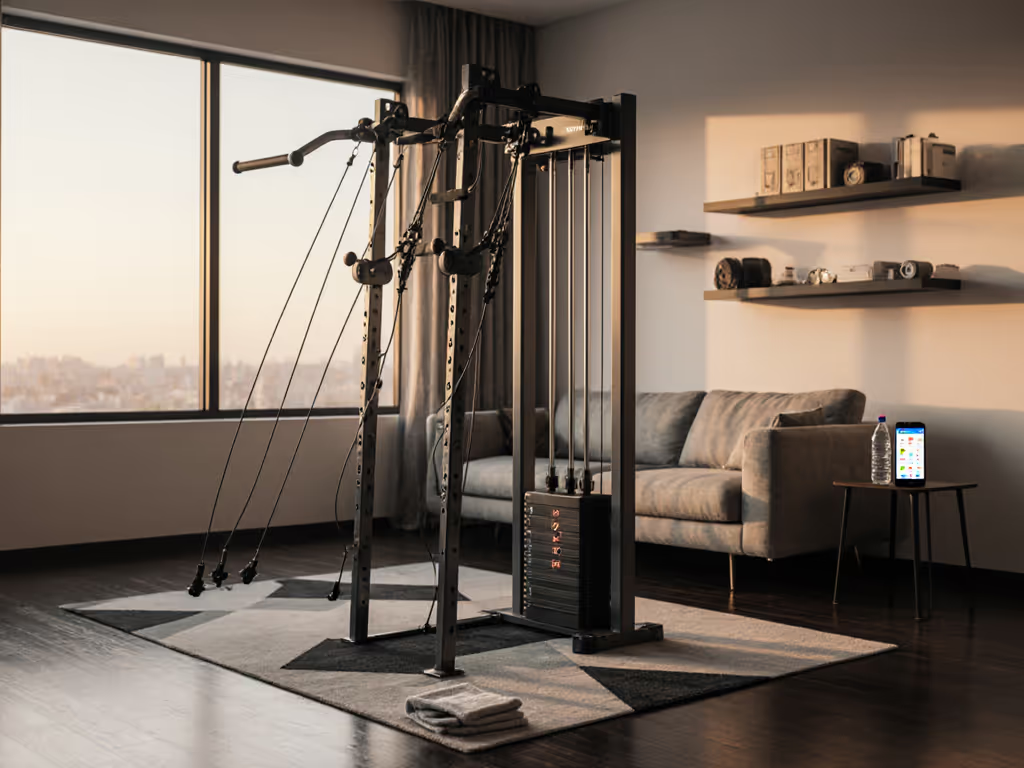
When space and budget constraints demand maximum efficiency from your home gym, functional trainer programming becomes your strategic advantage. Forget one-size-fits-all routines; true gains come from designing a cable machine workout system that evolves with your goals while respecting your physical and financial boundaries. In today's guide, I will walk you through a phased approach that transforms your limited space into a precision training environment, using data-driven methods that deliver measurable results without clutter or compromise.
Most published cable machine workouts assume unlimited space, perfect cable heights, and dedicated training rooms, realities that vanish when you're sharing a condo with thin walls or converting a garage with low ceiling clearance. What works for commercial gyms often creates three critical problems in home settings:
Rather than chasing exercises that sound comprehensive but don't fit your reality, focus on functional trainer periodization that aligns with your actual space parameters. Track your room dimensions like rep ranges: know exact clearance requirements before programming any movement. For cable woodchops, you'll need 3-4 feet of rotational space; for high-cable pull-throughs, check ceiling height against pulley positions. Document these constraints in your training journal (they're as crucial as your starting weight).
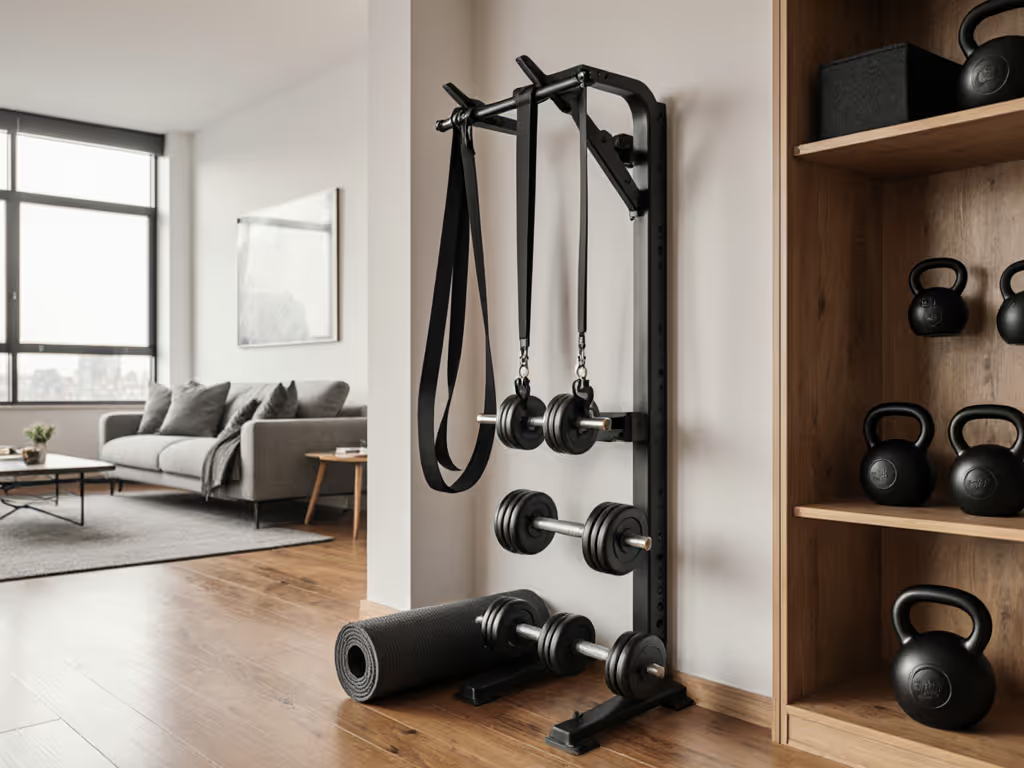
Approach your home cable gym machine like a systems architect, not an equipment collector. Every attachment must earn its storage space through measurable contribution to your goals. To keep attachments accessible without adding clutter, see our space-saving home gym storage solutions.
Start lean with the absolute essentials that deliver maximum movement variety within your spatial limits. Your goal isn't to mimic a commercial gym, it is to establish measurable baselines while minimizing visual and physical footprint.
Core Programming Strategy: Design full-body sessions using 3-4 anchor movements that leverage your space efficiently. For example:
Compatibility Notes: Verify pulley height range against your ceiling clearance before finalizing exercises. If your functional trainer's lowest position starts at 18" off the floor, traditional cable pull-throughs become impossible in rooms with under 8-foot ceilings. Opt for modified kneeling variations that maintain effective glute engagement within your constraints.
Space-Reclaim Tip: Mount your cable machine against the longest wall, not in room corners. This creates 180 degrees of usable movement space rather than restricting you to 90 degrees.
Cost Analysis: Entry-level functional trainers range from $800-$2,000 used. Factor in $150-$300 for essential attachments (handles, ankle straps). Total first-phase investment: $950-$2,300 with careful used-market shopping. Remember: your total cost of ownership includes storage solutions that keep cables off the floor.
After establishing baseline movement patterns, identify precisely where your system needs enhancement, not based on marketing claims, but on logged workout gaps. Did your cable rows plateau because you hit the machine's max weight? Is shoulder rotation limited by handle positioning?
Programming Upgrade Strategy: Implement documented periodization cycles:
Track cable position adjustments alongside weight increases. This data reveals your equipment's true limitations. If you consistently max out resistance at the mid-pulley position but have room to grow elsewhere, you've identified your specific upgrade path.
Compatibility Note: Verify attachment thread patterns before purchasing add-ons. Many functional trainers use standard 5/8" threading, but some budget models differ. Measure your existing handles to avoid incompatible purchases that waste both money and space.
Space-Saving Upgrade: Consider dual-stack conversion kits if your current system supports them. This enables independent resistance per side, which is crucial for unilateral training without buying a second machine. Expect $400-$700 for quality kits, but they effectively double your machine's functionality without increasing footprint.
At this stage, your programming should reflect highly specific goals rather than general fitness. Are you training for sport-specific movements? Rehabilitating an injury? Your cable machine's adaptability shines here, but only if you've maintained clean movement data from earlier phases.
Advanced Programming Strategy: Incorporate time-under-tension metrics alongside resistance:
This data reveals whether your limitation is true strength deficit or range-of-motion restriction, guiding targeted upgrades. For instance, if your lat pulldowns plateau at the bottom position, you need lower cable clearance, not more weight.
Resale Reality Check: Document all modifications and attachments. Upgraded systems with clean service records maintain 60-75% resale value in the used market versus 35-50% for unmodified units. This dramatically reduces your long-term total cost of ownership.
The smartest home gym owners treat their functional trainer like a modular platform, not a fixed destination. When evaluating potential upgrades, run these compatibility checks:
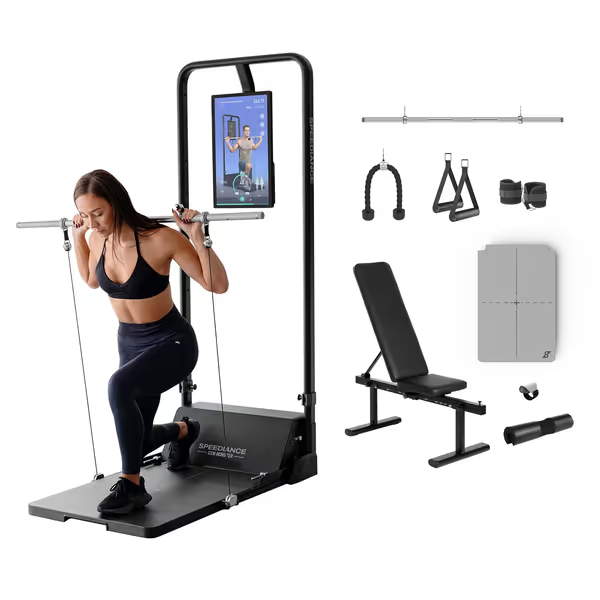
Avoid the sunk cost trap of keeping incompatible accessories. When I rebuilt my home gym after my rent spike, I sold attachments that didn't serve my space-constrained cable setup and reinvested in modular pieces that integrated with my fold-flat wall mount. Start lean, upgrade on schedule, avoid sunk-cost traps.
True functional trainer programming success isn't just about lifting heavier: it's about achieving measurable performance gains within your spatial constraints. Implement these tracking methods:
Range-of-Motion Metrics: Note maximum comfortable cable height for each movement. A 2-inch increase in overhead press range equals meaningful progress.
Time Efficiency Tracking: Record setup time for each workout variation. Streamlined transitions between exercises indicate optimized programming.
Space Utilization Rate: Measure percentage of your training zone actually used during sessions. Aim for 85-90% utilization. Beyond this, you are risking movement interference.
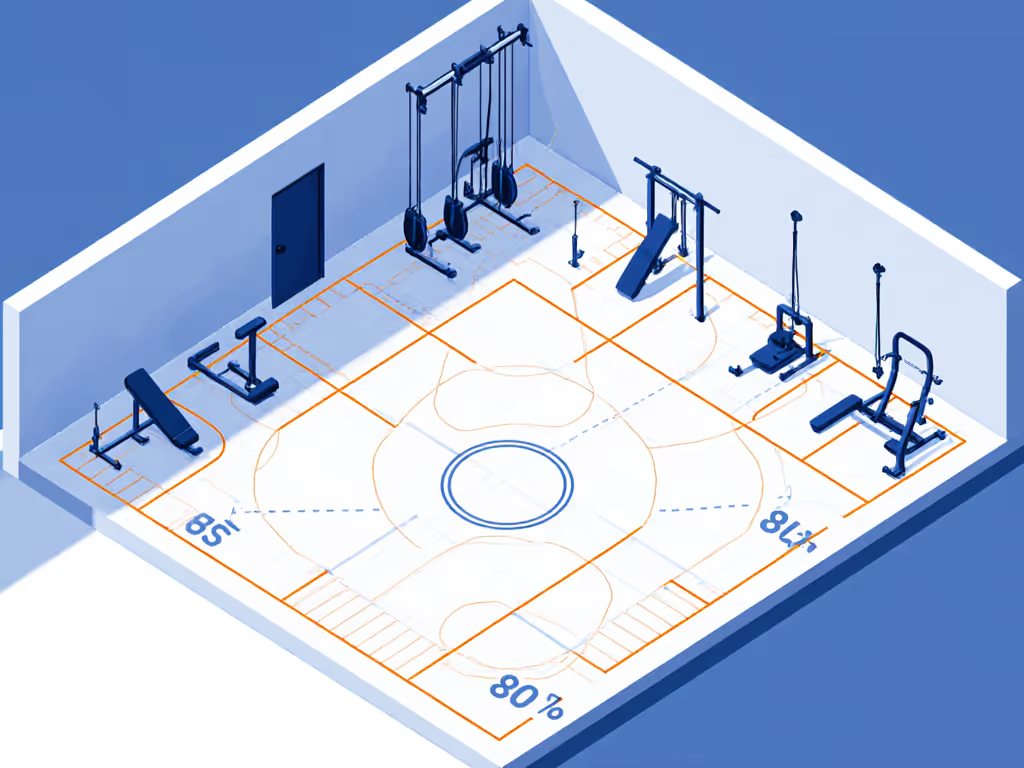
These metrics reveal whether your programming limitations stem from equipment constraints or true strength plateaus. When your data shows you've maxed out your current setup's capabilities, it's time for strategic upgrades, not before.
Your home gym should evolve like a well-planned project, not through impulse purchases, but through documented progression along a clear path. The most successful home gym owners I know treat their cable machine workouts as phases in a continuous journey, not destinations. They track spatial constraints as rigorously as rep counts and view every potential upgrade through the lens of true compatibility with their existing ecosystem.
Functional trainer programming isn't about collecting exercises: it is about designing a movement system that grows with you while respecting your living reality. By implementing this phased approach, you'll build strength without building clutter, achieve measurable progress without maxing your budget, and create a training space that remains functional whether you're in your current apartment or your next home.
Ready to refine your approach? Check manufacturer specs for pulley height ranges against your ceiling measurements, then document your current spatial limitations. This single act transforms your programming from guesswork to precision engineering. Roadmap, then checkout.