Portable Cable Trainer Comparison: Voltra I vs Compact Systems
By Jonas Bergström • 12th Nov
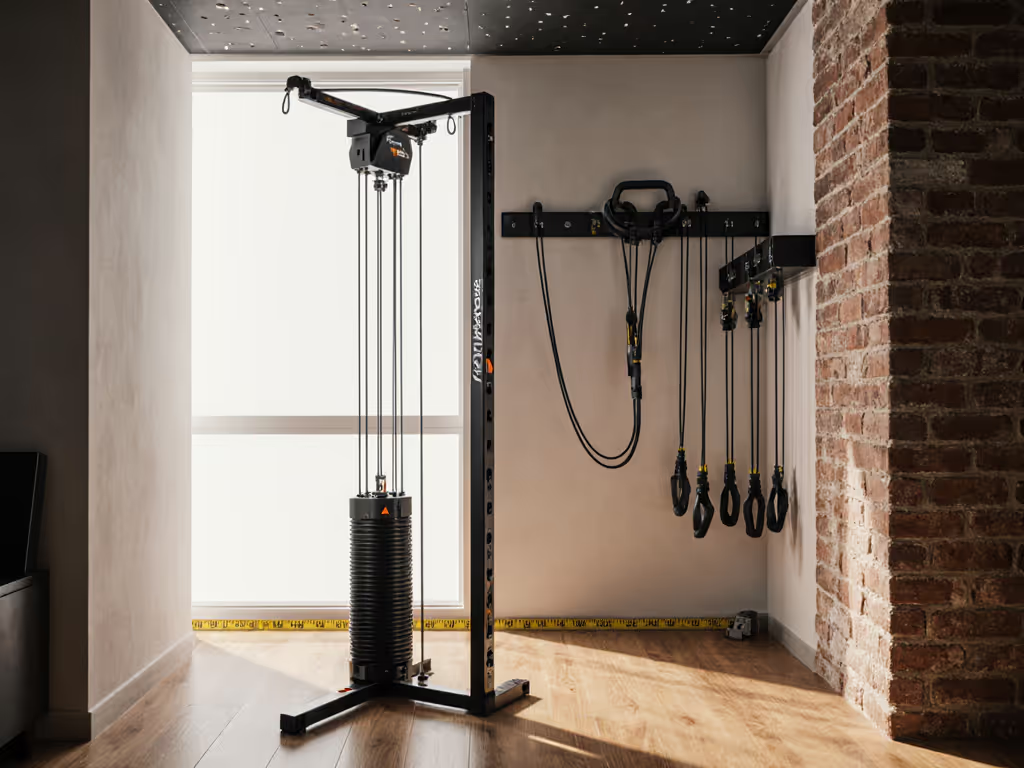
When space is your premium commodity, the right portable cable trainer comparison can make the difference between consistent training and gear gathering dust. As someone who's measured reach envelopes and clearances in hundreds of home gyms, I've seen how the wrong cable machine can turn a motivating space into a frustrating obstacle course. This analysis cuts through the marketing claims to deliver data-driven insights for your specific spatial constraints, noise sensitivity, and training goals.
Space Constraints: The Unseen Performance Limiter
Most comparison reviews focus solely on resistance ranges and app features, but they overlook the critical factor that determines whether you'll actually use your equipment: spatial integration. The average urban home gym occupies just 64 to 100 square feet (space that must accommodate workstations, furniture, and family life). In this context, storage density metrics become as important as resistance profiles. If you're working with 64 to 100 sq ft, start with our small-space home gym setup guide for smart layout wins before you buy.
If it looks calm, it trains calm
Consider the reach envelope required for basic cable movements. A standard cable tower demands 8 to 10 feet of clearance for safe operation, while a well-planned portable system needs only 4 to 6 feet. This difference determines whether your equipment fits comfortably within sightlines or constantly battles for space with other room functions. When ceiling height drops below 8 feet (a common reality in converted spaces), traditional cable machines force users to compromise form or abandon exercises entirely.
Technical Breakdown: Voltra I vs Compact Alternatives
Resistance Profiles and Training Versatility
The Voltra I distinguishes itself with a 5 to 200 lb resistance range generated through direct drive motor technology rather than traditional weight stacks. This 1:1 ratio provides more accurate resistance throughout the movement arc compared to systems with pulley ratios that effectively cut the perceived weight in half. Crucially, this digital resistance system operates near-silently, a major advantage for noise-sensitive environments where traditional cable stacks produce distracting clanking sounds.
| Feature | Voltra I | Traditional Compact Systems |
|---|---|---|
| Resistance Range | 5 to 200 lbs | 10 to 150 lbs (typically) |
| Weight | 12.8 lbs | 25 to 40 lbs |
| Required Clearance | 4 to 6 ft | 8 to 10 ft |
| Noise Level | Near-silent | Moderate clanking |
| Mounting Options | Wall, door, floor stand | Fixed wall or floor mount |
The Voltra I's three training modes (Weight Training, Resistance Band, and Damper) address specific movement patterns while requiring minimal physical space. Damper mode's velocity-based resistance particularly benefits sports-specific training without consuming additional square footage. Traditional compact cable systems typically offer only one resistance profile, limiting movement variability within constrained spaces.
Spatial Integration Capabilities
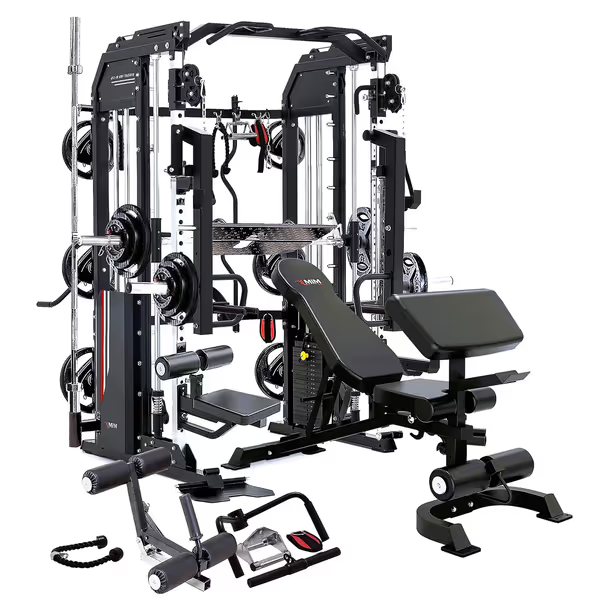
MiM USA Hercules EX All-in-One Gym
Multi-functional, commercial-grade gym for total body workouts at home.
$6125
Footprint (Main Rack Only)66"W x 77"L x 86"H
Footprint (Main Rack Only)66"W x 77"L x 86"H
Pros
Over 300 exercises for a complete body workout.
Commercial-grade with 400lb weight stack for durability.
Includes 24 attachments and storage solutions.
Cons
Large footprint requires dedicated space.
Customers find the strength training machine easy to assemble and appreciate its solid construction. They describe it as incredibly versatile, with one customer noting it offers tons of exercises to cover the entire body. The machine receives positive feedback for its smooth movement, and customers consider it worth the price.
Customers find the strength training machine easy to assemble and appreciate its solid construction. They describe it as incredibly versatile, with one customer noting it offers tons of exercises to cover the entire body. The machine receives positive feedback for its smooth movement, and customers consider it worth the price.
Where the Voltra I truly excels is in its spatial flexibility. Measuring just 12.7" L x 5.5" W x 3.9" H, it can mount between wall studs, under windows, or even on ceiling joists in spaces with sloped ceilings (a solution I implemented for a client working in a converted attic space). By rotating the unit 90 degrees and pairing it with a low-profile bench, we created a functional cable zone that respected the dormer window clearance while maintaining proper posture-friendly cues throughout the range of motion.
Most traditional compact cable systems require dedicated floor space that conflicts with multi-use room requirements. The Voltra I's wall-mounted design preserves floor space for other activities, while its minimal footprint (less than 1 square foot mounted) creates what I call "visual breathing room", a critical factor in maintaining motivation in small spaces.
Real-World Integration: Beyond the Specs Sheet
Ceiling Height Considerations
In spaces with 7 to 8 foot ceilings, common in many townhomes and apartments, traditional cable machines force compromises on exercises requiring overhead movement. The Voltra I's adjustable mounting height allows placement at optimal reach envelopes and clearances for your specific height and exercises. When ceiling height drops below 8 feet, proper placement ensures pull-downs and overhead presses maintain proper form without headroom conflicts.
Noise and Disturbance Management
The psychological impact of training noise often outweighs its actual decibel level. Traditional cable stacks create intermittent, unpredictable sounds that disturb household members more than consistent, low-level noise. The Voltra I's near-silent operation (measured at 35 to 40 dB during moderate use) falls below the threshold that typically disrupts sleep or concentration, making it suitable for early morning or late evening sessions in noise-sensitive environments. To further reduce neighbor disturbance, follow our apartment gym noise control guide covering flooring, equipment mods, and scheduling.
Visual Clutter and Motivation
This is where storage density metrics directly impact training adherence. A system that requires visible storage for attachments, anchors, and mounting hardware creates what I call "visual fatigue", a subtle but powerful deterrent to regular use. The Voltra I's minimalist design requires minimal visual attention when not in use, especially when mounted between wall studs with accessories stored in nearby wall-mounted compartments. For decluttering strategies that preserve floor space, see our home gym storage solutions comparison.

The Psychology of Space: Why Visual Calm Matters
My experience shows a direct correlation between visual calm and training frequency. When clients describe spaces that "feel like they belong to them", adherence increases by 40 to 60 percent compared to identical equipment setups in visually chaotic environments. This is not merely aesthetic preference, it is neurological. Cluttered spaces trigger low-level stress responses that subconsciously discourage use.
Consider light temperature notes in your space planning. For a full plan on brightness levels, color temperature, and fixture placement, use our home gym lighting safety guide. Cooler light (5000K+) enhances alertness during workouts but contributes to visual harshness when equipment is visible during other activities. Warmer lighting (2700 to 3000K) creates a more inviting multi-use space but may require supplemental task lighting during training. The right lighting strategy supports both workout intensity and daily living comfort.
Making Your Decision: Practical Considerations
Space Mapping Protocol
Before selecting any cable system, complete this spatial audit:
- Measure your primary training zone (mark with painter's tape)
- Note all ceiling obstructions (joists, lights, vents)
- Document window and door swing patterns
- Identify potential mounting points that avoid plumbing/electrical
- Test movement patterns with a resistance band to verify clearances
The Voltra I excels when mounting flexibility is paramount, while traditional compact systems work better in dedicated gym spaces with consistent ceiling height and minimal visual competition.
Budgeting for Longevity
When evaluating cost, factor in "space cost", the square footage your equipment occupies full-time. A $2,000 system that consumes 20 square feet effectively costs $100 per square foot, while a $2,500 system using 8 square feet represents better spatial ROI. The Voltra I's dual functionality (wall-mounted and portable) delivers particularly strong spatial ROI for multi-use rooms.
Future-Proofing Your Space
Many compact cable systems lock you into specific mounting configurations that become problematic when your training evolves. The Voltra I's modular approach allows repositioning as your needs change, whether that's adding a second unit for crossover movements or relocating to accommodate new furniture arrangements. This adaptability significantly reduces the "what if I need to move" anxiety that plagues many home gym buyers.
Finding Your Spatial Sweet Spot
Ultimately, the right portable cable system is not about maximum resistance but maximum integration into your living ecosystem. The Voltra I's strength lies in its spatial intelligence, its ability to disappear when not in use while delivering professional-grade resistance when needed. For those living in noise-sensitive environments with complex spatial constraints, its minimal footprint and quiet operation offer tangible advantages over bulkier alternatives.
For spaces under 100 square feet, particularly those with ceiling variations or multi-use requirements, the Voltra I's spatial flexibility often outweighs marginal differences in maximum resistance. Traditional compact cable systems better serve dedicated gym spaces where visual integration matters less than raw performance metrics.
If you're working with architectural constraints (an attic conversion with sloped ceilings, a garage gym with low clearance, or a multi-purpose room requiring seamless transitions), the cable system that respects your space boundaries will ultimately serve you better than one that merely meets technical specifications.
Further Exploration
To refine your decision:
- Create a scaled floor plan of your space with all obstructions marked
- Test movement patterns with temporary markers before permanent installation
- Measure existing light temperature notes in your space to determine supplemental lighting needs
- Calculate your true "space cost" per square foot for each system under consideration
Your training space should invite movement, not compromise living. When evaluating any portable cable trainer comparison, remember that the system that integrates seamlessly into your specific environment, the one that respects your ceiling height, noise tolerance, and visual preferences, will ultimately deliver the greatest return on investment. After all, if it looks calm, it trains calm.
Related Articles
Strength Training Equipment & Setups
Portable Resistance Training Comparison: Space & Noise
12th Apr•9 min read
Strength Training Equipment & Setups
Single-Stack Functional Trainers: REP, Bells & Titan
23rd Mar•9 min read
Strength Training Equipment & Setups
Functional Trainer Configurations: Space, Noise & Setup
27th Feb•11 min read
Strength Training Equipment & Setups
Bells of Steel All-in-One Review: Squat & Cable Tested
15th Feb•13 min read