Training & Programming with Limited Equipment
Limited Equipment Training: Design Your Program
11th Mar•7 min read

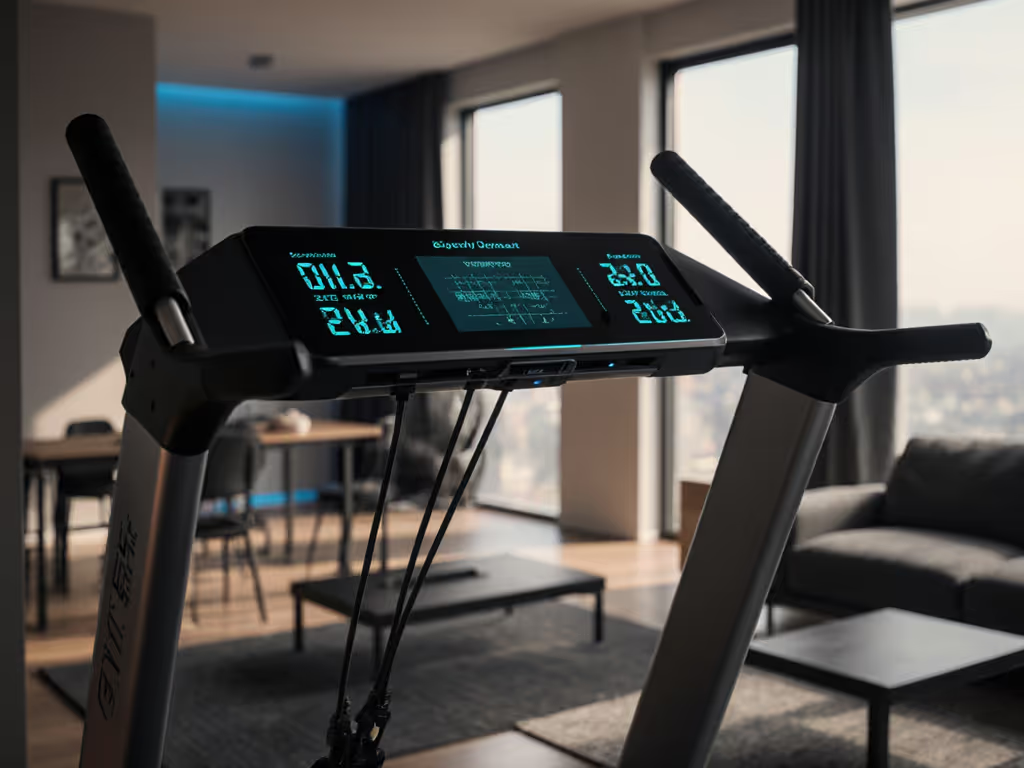
If you're building strength in a shared space or rented home, best resistance training bands paired with strategic band powerlifting programming offer a path forward that traditional barbell racks simply can't match. Resistance bands deliver progressive tension throughout your entire range of motion, meaning your muscles stay engaged longer without the floor-shaking impact of dropped plates or the ceiling-height drama of upright bars. For those of us managing noise anxiety, space constraints, and budget sequencing, bands aren't a compromise (they're the lever that makes a quiet, modular home gym actually work).
Before we lock into technique, here's the underlying advantage: resistance bands reduce the risk of injury by providing smooth, consistent resistance while eliminating harsh joint impact. A 2019 study confirms that training with resistance bands provides similar strength gains to conventional gym equipment. Better still, they're lightweight and portable, making them ideal for apartments, garage basements, and multi-use rooms where every square foot counts.
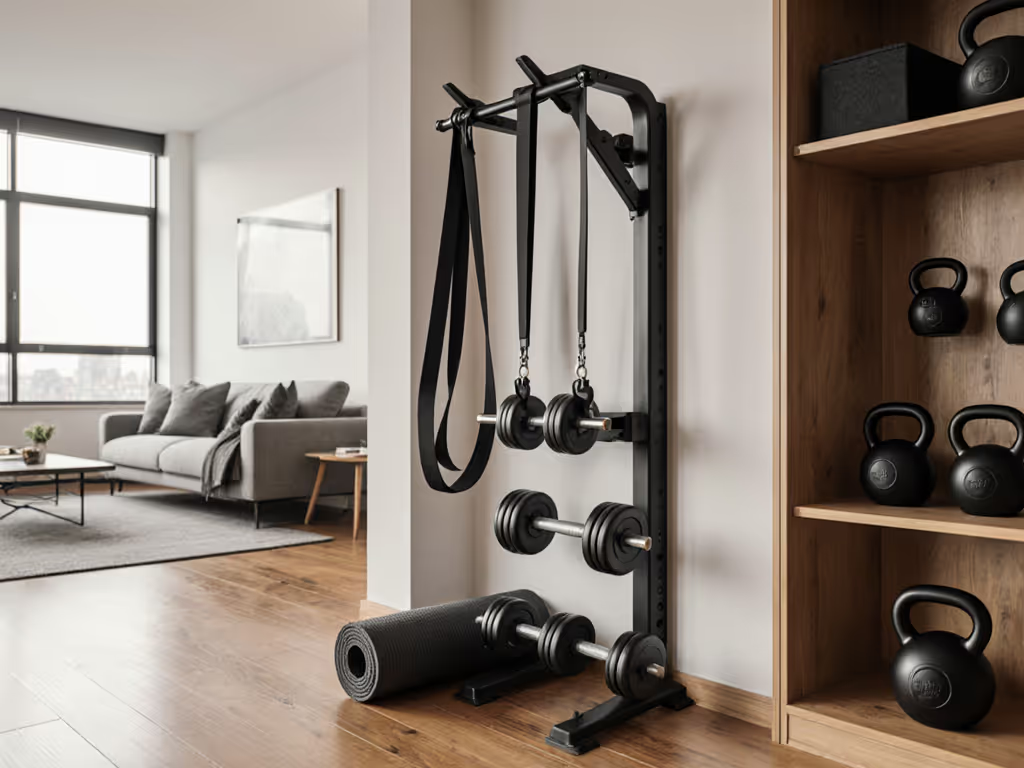
Bands also solve a core tension in home gym life: they require minimal infrastructure. No bolted racks, no reinforced floors, no early-morning guilt. That's the blueprint I've used to rebuild my own setup more than once (when rent spiked, I sold my bulky rack, kept the bar, and switched to a fold-flat wall mount, used plates, and a compact cable trainer). Modular systems preserve training and budget without cluttering a shared room. Start lean, upgrade on schedule, avoid sunk-cost traps.
The Setup
Stand on the center of a heavy-duty resistance band (or double loop for added resistance), hold each end, and pull upward. The mechanics feel similar to conventional deadlifts, but with one critical difference: bands provide minimal resistance at your weakest point (the bottom), then increase tension as you stand. This ascending resistance pattern means your muscles experience optimal strengthening efficiency as you drive upward through the lockout.
Cost & Space Reality
Technique Notes
Bands force you to recruit more stabilizer muscles because the unstable stretch demands active control throughout the pull. Keep your chest proud, core braced, and drive through your midfoot, just as you would with a barbell. The band creates variable load, meaning the top portion of your lift feels significantly heavier, which sharpens your lockout strength.
Programming Angle
Researchers documented that lifters combining free weights and resistance bands experienced higher power, torque, and 1-RM strength than either modality alone. For a band deadlift cycle, aim for 4-10 reps at 50-65% of your estimated 1-RM, with 10-20% banded resistance, and 2-3 second eccentric tempos for control work. This builds eccentric strength (your ability to absorb and control the weight as you lower it), which translates directly to safer, more confident barbell deadlifts. For a complete plan, see our band-only training programs.
The Setup
Stand on the band, hold the ends at shoulder height, and squat down until your thighs reach parallel (or as deep as your mobility allows). The band rises with you, resisting harder at the top portion of the squat where you're strongest. Bands eliminate the bar-height geometry that makes traditional racks problematic in low-ceiling basements or garages (no joist-hitting risk, no overhead clearance calculus).
Cost & Space Reality
Technique Notes
The ascending resistance of bands means the hardest part of your squat (the drive out of the hole) receives the least resistance, easing your transition and protecting knees. This makes bands particularly valuable if you have joint concerns or if you're rehabilitating from injury. The bottom portion (your weakest angle) gets gentler loading, while the lockout demands full power. Your core and stabilizers fire constantly to manage the band's lateral pull, which deepens core engagement. To protect floors and reduce vibration, compare home gym flooring options.
Programming Angle
Bands excel at hypertrophy work (muscle-building sets): 6-12 reps at moderate intensity, 2-second pauses at the bottom, minimal rest between sets. The continuous tension means your muscles stay stimulated longer, even at lighter loads. For strength-focused phases, drop to 4-6 reps with heavier banding resistance and longer rest windows (2-3 minutes). The variable load teaches your nervous system to fire maximally across the entire range, precisely what powerlifters exploit when they layer bands over barbells.
The Setup
Anchor your band to a sturdy, low point (a solid stair banister, a low power rack shelf, or a door anchor rated for bodyweight). If you plan to add a rack later, see our power rack setup guide for space and safety tips. Step forward into a staggered stance, hold both band ends at chest level, and press forward or overhead. The resistance increases as you press outward, meaning your lockout receives the most load, exactly where powerlifters want maximum tension.
Cost & Space Reality
Technique Notes
Band presses demand continuous core bracing because the band pulls you forward as it stretches. This instability is a feature: it forces every stabilizer muscle to engage, building resilience and functional strength that translates to safer bench pressing overall. Your shoulders stay packed, elbows stay neutral, and the ascending resistance teaches your body to drive hardest exactly when the leverage is worst (mid-range and lockout).
Programming Angle
Bands are ideal for repetition-focused hypertrophy work: 8-12 reps, moderate tempo (2-second concentric, 1-second eccentric), 60-90 second rest. For strength phases, shift to 4-6 reps with banded resistance 15-35% of your lockout load. The variable-resistance profile minimizes stress at your weakest point while overloading your strongest, which accelerates strength gain and reduces joint wear. Eccentric work (slow, controlled lowering) is especially valuable: use 2-3 second eccentrics at moderate intensity to build posterior chain resilience.
Now (Weeks 1-4): Essentials
Next (Weeks 5-12): Depth & Variety
Later (Months 4+): Hybrid Integration
Roadmap, then checkout: Phased spending avoids duplicates and lets you test what actually works in your space before committing to larger gear.
Band Longevity
Premium-grade latex bands are built to last through years of heavy use. Used bands from reputable sellers typically have substantial life remaining; inspect for cracks, tears, or discoloration before purchasing. Store in a cool, dark place away from direct sunlight and heat, which degrades latex. Cost per year: near-zero if you invest in quality upfront.
Attachment Integrity
Most door anchors and low-anchor points hold body-weight resistance indefinitely. If you upgrade to a rack later, ensure the cable attachment or anchor point accepts standard band diameters. Width compatibility typically isn't an issue (most bands are universal loop sizes), but verify loop-end vs. straight-end fitment.
Progressive Loading Logic
Unlike barbells where you add 5-10 pounds per session, band progression follows a different curve. You'll:
Resistance bands are inherently quiet. Rubber stretching produces minimal sound; no metal clanging, no dropped plates, no machine whir. This matters in shared walls. If you're training in a multi-unit building, use our apartment gym noise control guide for soundproofing tactics. When combined with quiet flooring (yoga mat, interlocking rubber tiles, or thin cork), band training is apartment-friendly at 6 a.m. or 10 p.m. without triggering noise complaints or HOA friction.
Bottom Line: You're not sacrificing strength to preserve household harmony. Research confirms band training builds muscle and strength equivalently to traditional equipment while solving the quiet, space, and budget puzzles that hobble most home gyms.
Band deadlifts, squats, and presses are your foundation. Over the next 4-12 weeks, track which movements feel best in your space, which anchor points hold strongest, and which resistance levels match your current strength. Use that data to guide your Next and Later phases. Your gym will evolve with your goals and your life (that's the point). Modular systems don't trap you; they free you to adapt without waste.
Ready to explore further? Start by researching used-band availability in your area, identify your anchor points (door frames, low railings, stair banisters), and measure your overhead clearance and floor footprint. That small reconnaissance work will make roadmapping your first 12 weeks precise and confident.