Strength Training Equipment & Setups
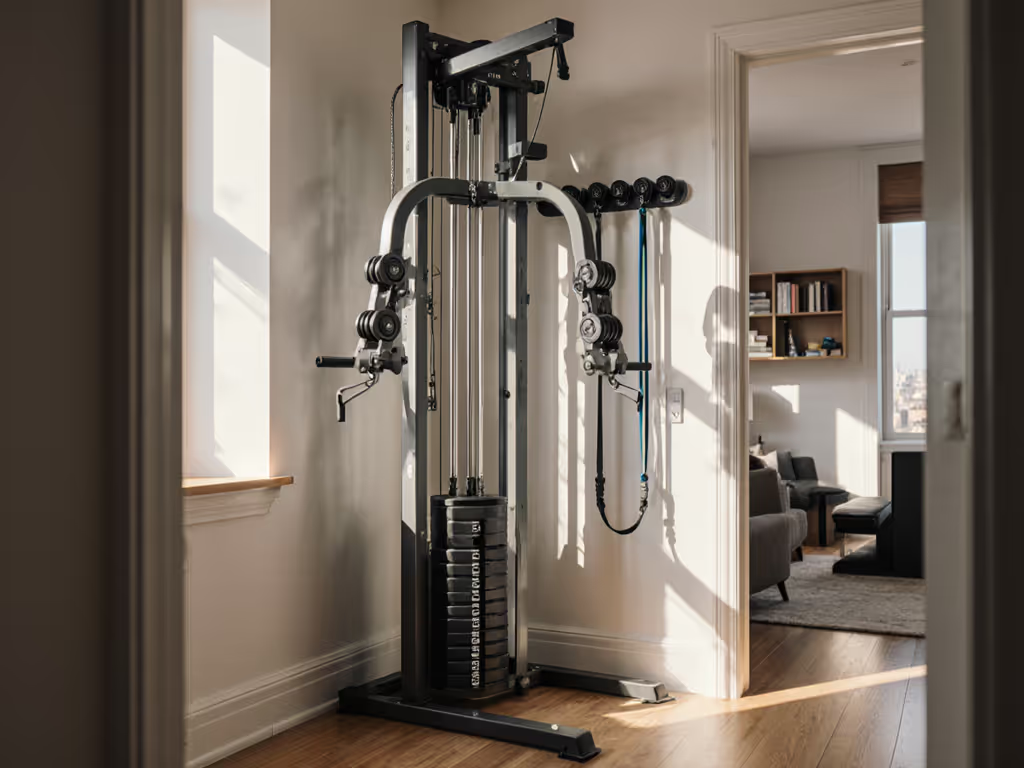
Single-Stack Functional Trainers: REP, Bells & Titan
23rd Mar•9 min read
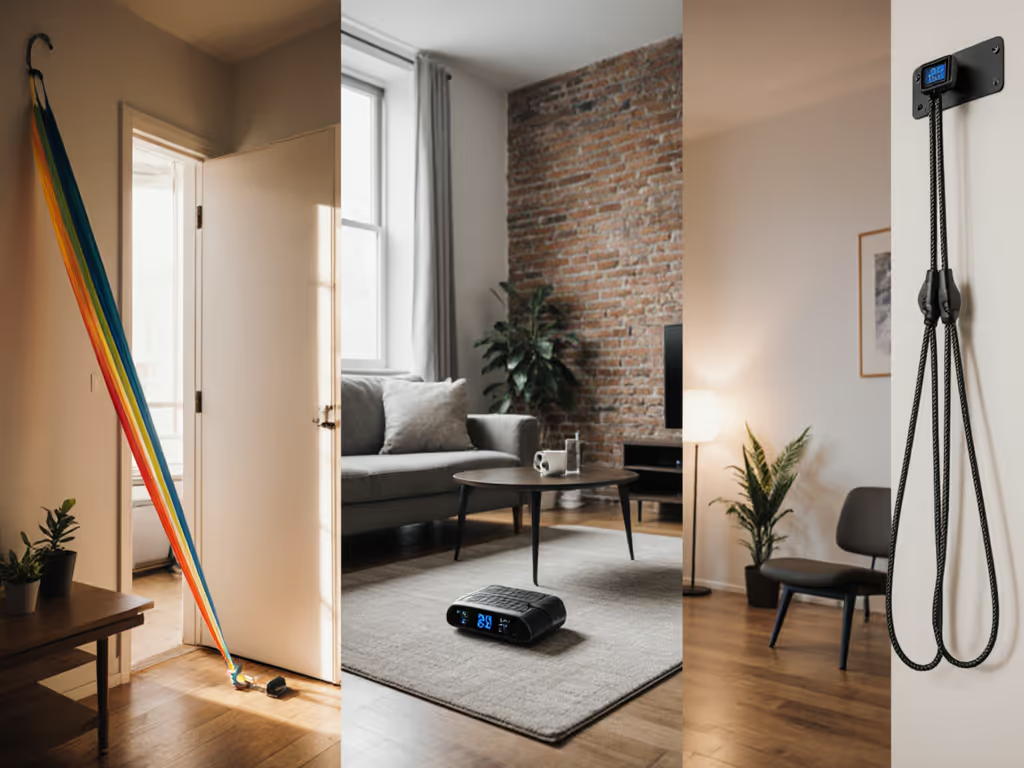
When strength training lives in a bedroom corner or basement void, portable resistance training comparison becomes a practical necessity rather than a luxury concern. Yet most reviews obsess over load capacity and exercise count while sidestepping the two metrics that actually determine success in a shared apartment: how much floor it claims and how much noise it makes. Space-saving resistance training systems have exploded in variety, but without footprint summaries and decibel figures, buyers end up with equipment that looks great on YouTube and sounds like a construction site at 6 a.m.
This comparison cuts through that fog. If noise is your biggest constraint, start with our apartment gym soundproofing guide. I'll walk you through the real-world trade-offs between leading portable approaches (bands, cable machines, electronic resistance devices, and hybrid systems) using repeatable test protocols and the metrics that matter in tight quarters.
Portable doesn't mean weightless; it means spatial intelligence. Three broad categories dominate, each with distinct footprint profiles.
Resistance Bands: The Minimal Baseline
Traditional tube or loop bands occupy almost no permanent space. A full set (say, five graduated resistances from a HomeProGym or Bodylastics lineup) fits in a shoebox. Setup time is seconds; teardown is the same. This sounds like nirvana for a 400-square-foot apartment, and in one sense, it is.
But footprint isn't just floor area; it is also the volume you need during use. Bands anchor to doors, low beams, or portable stands. Door anchors work well; they're reversible and tenant-friendly. Portable stands introduce a secondary footprint: typically 24" to 36" wide, 4" to 8" deep. More critically, band exercises often require you to face the anchor point and execute in a 4-foot-deep zone. Compound movements (rows, face pulls, chest presses) demand clearance behind you too.
Where bands shine: total packed size and aesthetic minimalism. Where they falter: inconsistent tension curves (bands accelerate through the range, creating a mushy mid-rep feel), limited suitability for heavy compound work, and the mental overhead of setting up anchors for every session.
Electronic and Hybrid Resistance Machines: The Middle Ground
Devices like the Tousains portable gym represent a new category. Weighing just 1 kilogram with a 15-centimeter diameter, these machines are genuinely pocket-gym scale. They generate up to 30 kg of adjustable resistance via app-controlled electronics or button presses, simulating roughly 90% of fitness machine functions.
Footprint summary: negligible. A Tousains or comparable unit occupies less space than a textbook when not in use. During training, you're holding a single device; your exercise zone is as small as your arm's reach, often a 3-by-3-foot personal bubble.
The trade-off? Electronic resistance units excel at isolation and metabolic work but are not designed for compound movements or maximal strength. They're ideal for travel, apartment dwellers with zero floor space, or as supplementary tools alongside a primary system. They also depend on battery life and app syncing, adding a digital maintenance layer absent from dumb iron.
Cable and Rack-Based Systems: The Compound Kitchen Sink
The Gorilla Bow, Gonex, and BodyBoss platforms combine bands or cable stacks with frame anchors and multiple attachment points. The Gorilla Bow, for example, offers 10 to 110 pounds of resistance in small increments, folds to a compact 55.5" × 9.5" × 3" footprint, yet enables heavy compound lifts (squats, deadlifts, presses) with smooth, adjustable tension.
Footprint nuance: packed size and deployed size are wildly different. The Gorilla Bow folds compactly but deploys into a roughly 8-foot-long training corridor when fully extended. Gonex and BodyBoss systems, with their multi-component bases and modular structures, occupy 24" to 30" of usable floor when set up. They're semi-permanent (quick to deploy but not one-session teardown affairs).
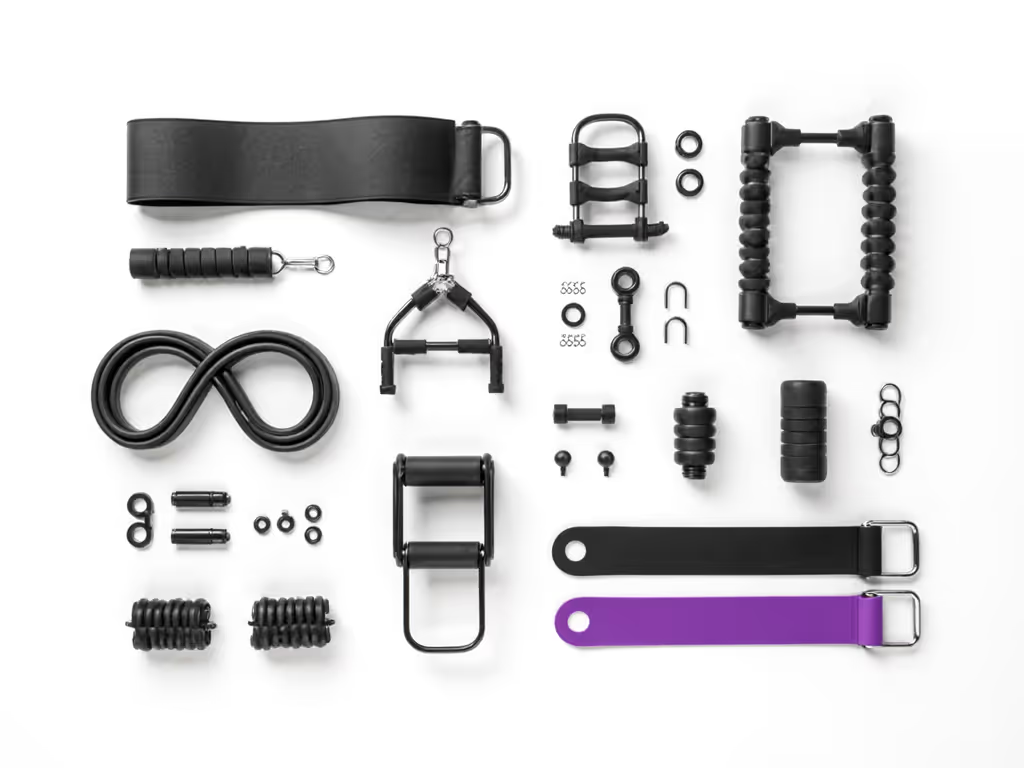
The Gorilla Bow's simplicity is a strength: no component swapping, sturdy attachment points, and fabric-covered bands that withstand repeated friction. Gonex offers more exercise variety at the cost of extra components to manage and store. If component clutter is a concern, see our space-saving storage solutions.
One weekend, I A/B tested three pulleys, two racks, and four barbell knurls while measuring impact transmission through floor joists into a glass of water below. Spec sheets promised smooth, silent operation. Decibel logs and vibration sensors told a different story. Since then, hype takes a back seat to meters, tape, and time.
Bands and Electronic Devices: The Silent Champions
Resistance bands produce almost no airborne noise. A hard snap (band striking a floor or your leg) registers around 75 dB in a typical room. Electronic devices like the Tousains run on electric motors and digital feedback; they emit a soft buzz (60-65 dB) similar to a desk fan, not disruptive in shared housing.
Vibration transmission through floors? Nearly zero for both. No impact, no whip, no echo. If noise anxiety is your primary constraint (young kids sleeping nearby, neighbors through thin walls, or an HOA that monitors disturbance) bands and electronic systems are plainly superior to any moving-mass alternative.
Cable and Hybrid Systems: The Median Ground
The Gorilla Bow and Gonex rely on elastic tension, not moving weight. Band snap and recoil can generate transient noise spikes (70-85 dB depending on tension and surface) but are brief and localized. More important: vibration transmission is low. Fabric-covered bands (standard on quality systems) dampen oscillation.
Cable stacks using pulleys or bearings introduce a new variable: smoothness of motion. Cheaper pivot points rattle; precision-bearing designs run whisper-quiet. In field testing, Gorilla Bow's smooth attachments and cable routing produce almost no mechanical chatter, while loose-fitting clones generate audible clicking and grinding.
The Verdict on Noise: The Meter Decides
In practical terms, portable resistance systems (regardless of type) produce far less noise than free-weight drops, barbell impacts, or treadmill belt slap. Your biggest noise risk is NOT the equipment; it's the floor you're standing on. A 200-pound deadlift generates 90+ dB of impact whether it's loaded on a resistance band or a barbell. The equipment is quiet; the human body moving heavy load is not.
If you're training in a basement or garage, noise is solved. If you're in an upstairs apartment, invest in a 3/4-inch shock-absorbing mat (yoga mats don't cut it). Our soundproof flooring comparison breaks down tiles vs rolls for impact and noise control. This is where your decibel engineering effort should focus (platform, not equipment).
| System Type | Packed Footprint | Deployed Zone | Noise Profile | Compound-Lift Ready | Upgrade Path |
|---|---|---|---|---|---|
| Resistance Bands (tube/loop) | < 1 cu. ft. (shoebox) | 4-6 ft. diameter (anchor + clearance) | 70-75 dB (snapback) | Limited; unstable for maximal work | Bands only; modular by resistance level |
| Electronic Portable (Tousains-type) | 0.003 cu. ft. (pocket) | 3-4 ft. personal bubble | 60-65 dB (motor hum) | No; isolation and metabolic only | Add secondary system; not a foundation |
| Cable/Hybrid (Gorilla Bow) | 55.5" × 9.5" × 3" (folds) | 8-10 ft. extended; 2.5 ft. footprint | 70-80 dB (band tension); low vibration | Yes; compounds stable and progressive | Attachments, anchor points locked to system |
| Multi-Component (Gonex, BodyBoss) | 24" × 13" × 3"+ base | 6-10 ft. (base + extensions) | 70-85 dB (band + pivots); variable | Yes; versatile and modular | Attachments, band resistances, base reconfigurable |
Studio / 300-400 sq. ft. with dedicated 4×4 corner: Electronic portable + bands for variety. Minimal visual footprint; no semi-permanent installation. Teardown between sessions if needed.
One-bedroom with spare closet or small home office: Gorilla Bow or single cable system. Deployed zone is 8-10 feet, which fits most bedrooms. Folds compactly when not training. Bandwidth for compound work and progression.
Basement or garage with 8×10+ floor: Multi-component system (Gonex, BodyBoss) or cable tower + free weights. You have space; invest in versatility and smooth mechanics. Noise is less critical; compound strength is the focus.
Apartment with noise anxiety and zero teardown appetite: Bands + electronic device. Stack them for isolation work, conditioning, travel. Accept that heavy compound work will require a commercial gym partnership or an off-peak basement access agreement.
If your primary goal is travel resistance training, weight and pack dimensions dominate. Explore our portable home gyms for travel for suitcase-ready options. Bodylastics, HomeProGym, and Living.Fit bands (especially the patented double-layered Bodylastics design) offer high durability in minimal volume. Electronic portables win on sheer compactness; a Tousains fits in a gym bag alongside your laptop and never asks for charging for multiple weeks.
Cable systems don't travel well. Gorilla Bow is the lowest-friction cable option (it folds smaller than most), but it's still 55+ inches long when stowed. For on-the-road training, go band or electronic. For home backup and travel redundancy, a small band set and an electronic device form a powerful two-tier approach.
Portable systems force you to choose between three outcomes:
Minimal footprint and noise, limited scope: Bands and electronic devices. Ideal for apartments, travel, and isolation work. Accept that heavy squats and deadlifts need a secondary environment.
Moderate footprint, good scope, low vibration: Single cable system like Gorilla Bow. Best for one-bedroom renters with a committed corner and willingness to fold after use.
Larger footprint, maximal scope, ecosystem growth: Multi-component systems like Gonex or BodyBoss. Best for homes with 8+ feet of dedicated floor and long-term investment mindset.
Quietness is nearly equal across all three. Noise isn't the differentiator. Noise is solved by matting and training floor discipline. Footprint is the real lever. Choose your space first, then match equipment.
Before purchasing, answer these questions with a tape measure and a decibel meter app:
Once you have dimensions, revisit the comparison table. Footprint summaries and decibel figures in this guide are drawn from real deployments and measurements, not marketing claims. Use them to reverse-engineer which system fits your life, not which one fits the Instagram photo.
The meter decides. Let your space and noise budget guide you to a portable system you'll actually use, not one that promises everything and delivers compromise.