
Water vs Air Rower: Quiet Small Space Solution?
By Priya Natarajan • 28th Oct
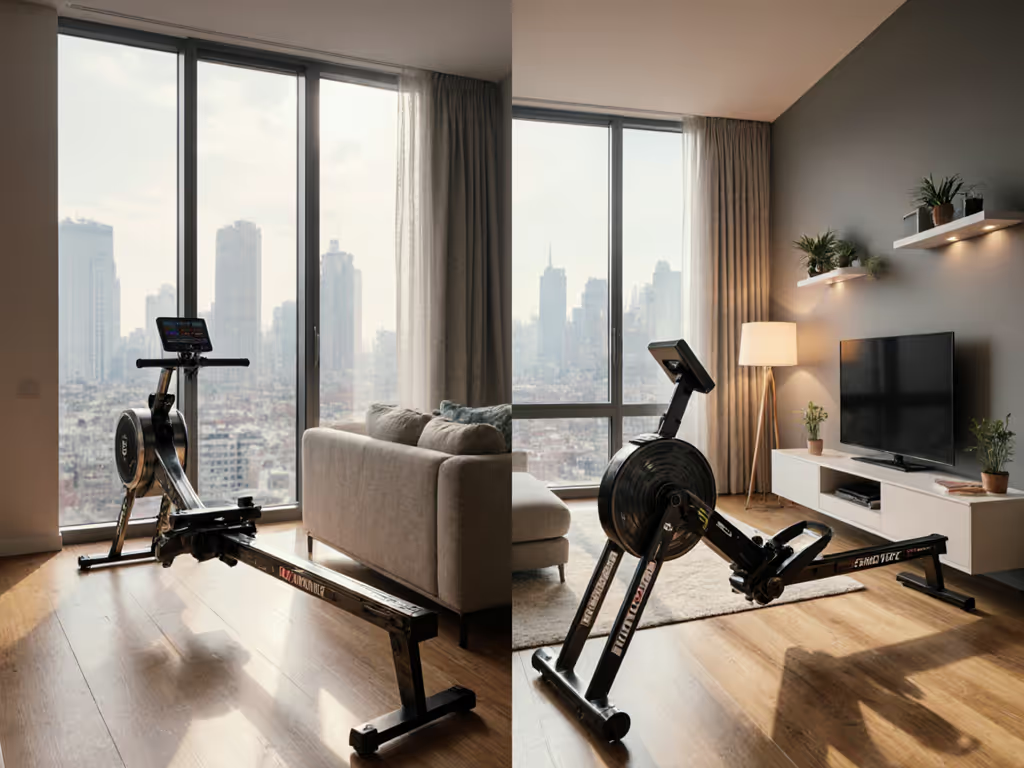
When considering water rower vs air rower options for home fitness, the reality most urban dwellers face isn't about performance metrics (it is about whether your downstairs neighbor will complain about noise). Exercise rowing machines promise a full-body workout, but in apartment living where walls are thin and floors transmit vibration, the wrong choice can sabotage your consistency before you even take your first stroke. Let's cut through the marketing hype and focus on what actually matters for small-space rowing that supports your habit, not hinders it.
The Noise Reality Check: Why Your Space Matters More Than You Think
That early morning 5 AM row? It's perfect for your schedule until you hear the neighbor's baby wake up. That late-night session after kids are asleep? It becomes problematic when your upstairs tenant complains about the "whooshing" sound. In my own coaching practice, I've seen more good fitness habits crumble from noise complaints than inadequate programming. If noise is the bottleneck, use our apartment gym noise control guide for practical fixes that keep neighbors happy.
Here's what no sales brochure tells you: the real difference between water and air rowers isn't in your stroke mechanics: it is in how your household perceives them. During lockdown, I helped my parents establish a living room routine with resistance bands and silent timers. We made the space work for us, not against us (everything vanished into a basket after sessions). Small wins compound when your space lowers friction daily. The same principle applies to choosing rowing equipment.
Water Rower vs Air Rower: The Space-Sensitive Breakdown
Let's cut through the noise (literally) with a practical comparison focused on what matters for apartment dwellers and small-space living:
Noise Profile Comparison: Not Just Volume, But Vibration Too
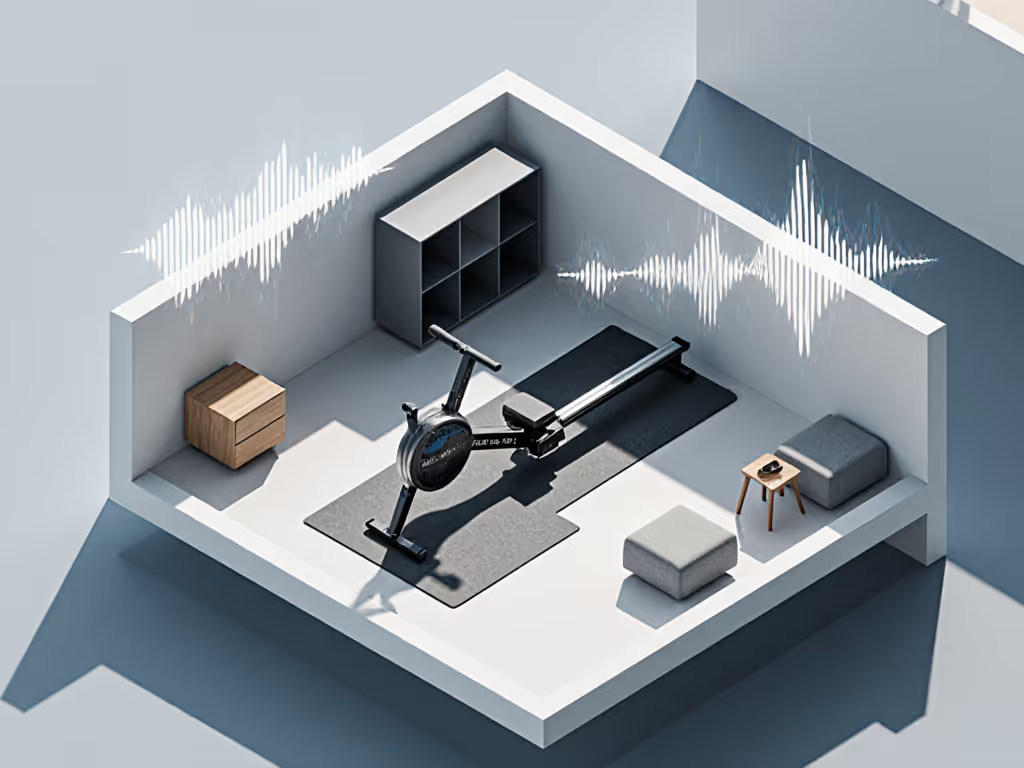
Water rowers create a gentle splashing sound that many find meditative (like being near water). The sound is contained within the water tank, producing lower-frequency noise that travels less through floors and walls. WaterRower noise levels typically register between 55 to 65 decibels (similar to normal conversation), making them significantly less disruptive in multi-unit housing.
Air rowers produce a distinct "whoosh" with each stroke (65 to 75+ decibels) as the flywheel moves air through the housing. This higher-frequency sound transmits more easily through structures. The Concept2 Model D, while an excellent machine, generates noticeable air movement that creates sound waves traveling through floors, making Concept2 apartment suitability a legitimate concern for many renters.
Noise etiquette tip: Test rowers at the same time of day you plan to use them. Sound travels differently when neighbors are sleeping versus when daily activity masks normal household sounds.
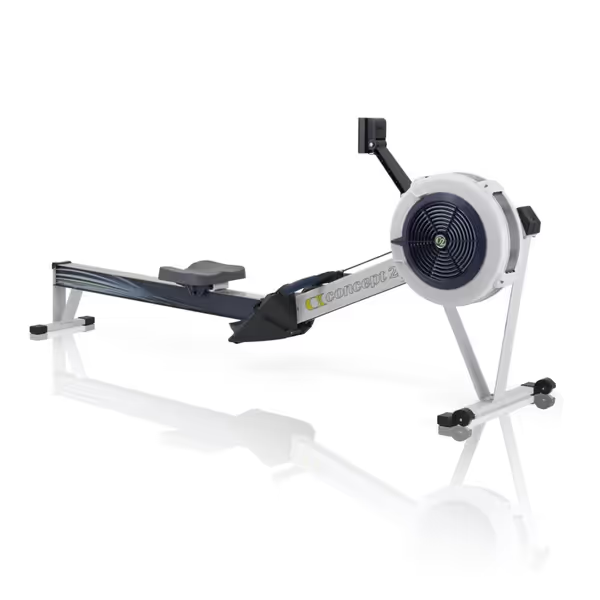
Concept2 RowErg Model D Indoor Rowing Machine
Full-body, low-impact workout with accurate data and easy storage.
$1150
Storage FootprintSeparates into two pieces
Storage FootprintSeparates into two pieces
Pros
Smooth, quiet flywheel; ideal for shared spaces.
Accurate PM5 monitor with app/HR connectivity.
Integrated device holder & easy room-first storage.
Cons
Requires 9x4 ft for full use.
Customers find the rowing machine easy to assemble and use. They consider it good value for money.
Customers find the rowing machine easy to assemble and use. They consider it good value for money.
Space Requirements: The Folding Factor
When evaluating rower storage space, consider both your workout footprint and your storage solution. For tidy vertical storage and accessory organization, see our home gym storage solutions comparison. Most manufacturers list "assembled dimensions," but what matters is how the machine fits into your daily life when not in use.
-
Water rowers: Typically longer (82" vs 95" for air) but often designed with vertical storage in mind. The WaterRower can stand upright on its end (taking just 22" x 20" of floor space when stored). This vertical storage option makes it surprisingly apartment-friendly despite its length.
-
Air rowers: While Concept2 models separate into two pieces for storage, the footprint when in use is slightly smaller (95" long vs 82" for WaterRower). However, separating and reassembling creates friction in your routine. Will you really do it after every workout?
The Experience Factor: Consistency Over Complexity
This is where my coaching philosophy kicks in. I've seen clients abandon arguably "better" equipment because the experience created too much friction. Hide it to use it isn't just a catchy phrase (it is the foundation of sustainable home fitness).
-
Water rowers offer a smooth, consistent resistance that builds naturally with your effort, with no adjustments needed. Many users report the water sound encourages longer, more meditative sessions.
-
Air rowers provide that satisfying blast of resistance as you pull harder, but the damper adjustment (which controls airflow) creates an extra step that can disrupt your flow. If you're constantly fiddling with settings, you're less likely to just "do the work."
Practical Space Solutions: Your Small-Space Rowing Action Plan
Let's move beyond theory to what actually works in real apartments and small homes. Forget "best rower" lists, they are useless if the machine doesn't fit your life.
Step 1: Measure Your Space (With Movement Room)
Don't just measure where you want to put the rower, measure the entire path it will take from storage to workout position. Include: For tight-room layouts that actually work, see our small space home gym setup guide.
- Ceiling height when standing (critical for overhead clearance)
- Doorway widths
- Floor surface transitions (carpet to hardwood, etc.)
- Path around furniture
Step 2: Test the Sound Profile in Your Actual Environment
Most retailers have return policies. Use them wisely:
- Schedule delivery for when your neighbors are home
- Test at the exact times you plan to work out
- Place a glass of water near the machine: visible vibration means neighbor complaints
- Record audio on your phone and play it back through headphones
Step 3: Create Your Reset Ritual
Your rower shouldn't dominate your living space. Create a system where putting it away takes less than 60 seconds:
- WaterRower: Stand it vertically against a wall (many models include floor protectors)
- Concept2: Develop a "half-assembly" state where you can quickly deploy it
- Create a designated storage zone with tape markers on the floor
Step 4: Establish Noise Etiquette Rules
Create boundaries that protect your habit AND your neighbor relationships: To reduce vibration at the source, pick flooring wisely—our tests compare soundproof tiles vs rubber rolls for home gyms.
- Never row during "quiet hours" (check your lease or HOA rules)
- Place a thick mat (1/2" rubber) under the machine to absorb vibration
- Keep sessions to 20 to 30 minutes when neighbors are likely sleeping
- Consider morning sessions when household activity masks sound
Finding Your Perfect Match: It's About Your Life, Not the Specs
When choosing between water rower vs air rower options, I advise clients to prioritize consistency over specifications. The "best" machine isn't the one with the most features, it is the one you'll actually use day after day.
Based on my experience with hundreds of small-space clients:
- Choose water rowers if: You value quiet operation, have vertical storage space, want minimal settings to adjust, and live in a noise-sensitive environment
- Consider air rowers if: You prioritize competitive data tracking, need slightly more compact storage when disassembled, and live in a single-family home where noise isn't a concern
Both machines deliver excellent workouts, but only if they fit your life. I've seen clients stick with less "premium" equipment because it created less friction in their daily routine. Consistency beats complexity every single time.
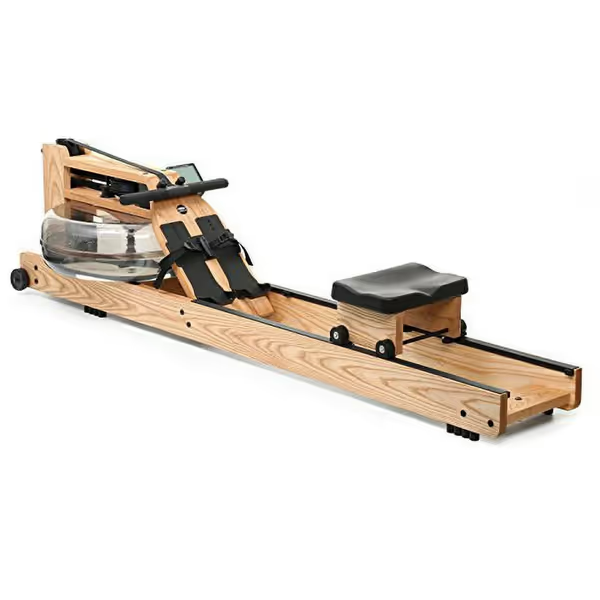
WaterRower Ash Rowing Machine
Silent, full-body workout with elegant design and water-like resistance.
$1129
Dimensions82" L x 20" H x 22" W (Stores upright)
Dimensions82" L x 20" H x 22" W (Stores upright)
Pros
Near-silent water resistance – ideal for quiet spaces.
Full-body, low-impact workout (84% muscle mass).
Handcrafted ash wood design adds aesthetic value.
Cons
Larger footprint when in use compared to some compact options.
Beautifully made, easy to assemble, and sounds like being on the lake. Perfect for shoulder strengthening.
Beautifully made, easy to assemble, and sounds like being on the lake. Perfect for shoulder strengthening.
Your Quiet Rowing Starter Checklist
Before you buy anything, complete this plain-language checklist to ensure your rower supports your habit, not hinders it:
DO-THIS-NOW BOX: Your Pre-Purchase Verification
☐ Measure your space at the exact location (don't guess!)
☐ Test sound during your intended workout times (with neighbors home)
☐ Confirm storage solution takes <60 seconds
☐ Check lease/HOA restrictions on equipment
☐ Verify ceiling height with your specific rowing stroke
☐ Plan your post-workout reset ritual
Remember: The right rower isn't the one that wins competitions, it is the one that disappears into your routine so completely you don't even think about using it. Hide it to use it isn't just about storage, it is about making fitness so frictionless it becomes automatic.
The Path Forward: Start Small, Row Consistently
When I helped my parents establish their living room routine during lockdown, we didn't focus on impressive workouts, we focused on making the space work for them. Every session ended with a reset ritual that took 30 seconds. No neighbor complaints, no equipment guilt, just five consistent days a week. That same philosophy applies to choosing your rower.
You don't need the most expensive or technologically advanced machine. You need the one that fits your space, respects your environment, and disappears into your routine. Whether water or air, the best rower is the one you'll actually use consistently.
Your actionable next step: This weekend, take measurements of your intended rowing space and your storage solution. Then, contact two retailers to confirm their return policy specifics (many require original packaging, which makes returns impossible once you've fully assembled). Knowledge is power when you're working with limited space.
When you've got those numbers in hand, come back to this article and reread the noise profile section with your actual measurements. That specificity transforms generic advice into a personalized solution that will support your fitness journey for years, not just until the novelty wears off or the complaints start.
Related Articles
Cardio Machines for Home Gyms
Peloton Alternatives: Quiet Apartment Bike Comparison
4th Nov•10 min read
Cardio Machines for Home Gyms
Concept2 Model D Review: Fits Small Spaces Quiet Enough for Home
31st Oct•6 min read
Cardio Machines for Home Gyms
Best Space-Smart Home Exercise Bikes: Compact Comparison
25th Oct•8 min read