Buying Guides by Audience & Goal
Good Home Gym Equipment For Quiet Muay Thai And Thai Boxing
21st May•15 min read
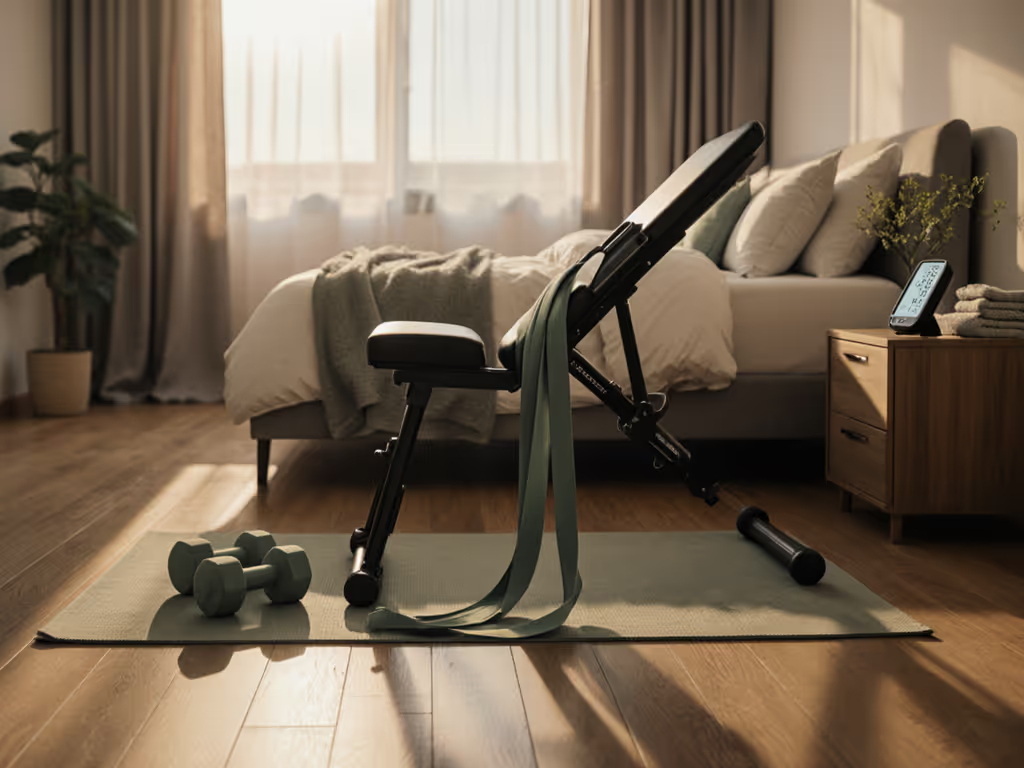
People managing high blood pressure know that consistent, moderate-intensity cardio is non-negotiable, but so is keeping that workout quiet. Whether you're in an apartment with thin walls, a shared townhome, or a basement near sleeping kids, traditional home gym setups often feel like a trade-off between effective training and neighborhood peace. For strategies to keep neighbors happy, see our apartment gym noise control guide. The irony is sharp: the stress-reduction and cardiovascular benefits of regular exercise are undermined the moment you're worried about disturbing your family or incurring an HOA complaint.
The challenge compounds when you're working with limited square footage. Blood pressure workout equipment needs to deliver safe, sustained cardio without the clatter, vibration, or footprint of conventional machines. Add budget realities (many people managing chronic conditions are also managing fixed incomes), and the problem becomes acute: how do you build home gym equipment that supports your health, respects your space, and keeps the peace?
Most people start with an assumption: buy a treadmill or rowing machine, plug it in, and train. What they find instead is noise that transmits through joists, equipment that occupies half the room, and a growing sense of regret the moment they consider resale value or upgrade paths.
A bulky machine also locks you into a single modality. If your knees flare during certain movements, or if your training focus shifts, you're stuck with an expensive anchor that doesn't serve your evolving needs. I learned this the hard way when rent spiked years ago. My solution wasn't to accept the constraints (it was to sell the sprawling rack and rebuild around what actually mattered): the bar stayed, but the platform became a fold-flat wall mount, the plates shifted to used inventory, and I added a compact cable trainer. That modular pivot preserved my training and my budget without cluttering a shared room. The lesson stuck: start lean, upgrade on schedule, avoid sunk-cost traps.
For those managing blood pressure, the stakes are higher. Exercise consistency matters more than exercise intensity. Noise anxiety erodes that consistency, and missing sessions because you're worried about waking a partner or guilt-spiking your own BP before you even begin training defeats the health benefit entirely.
Building a quiet hypertension training setup means thinking in phases. You're not buying everything at once; you're building a system that grows with your goals and your budget.
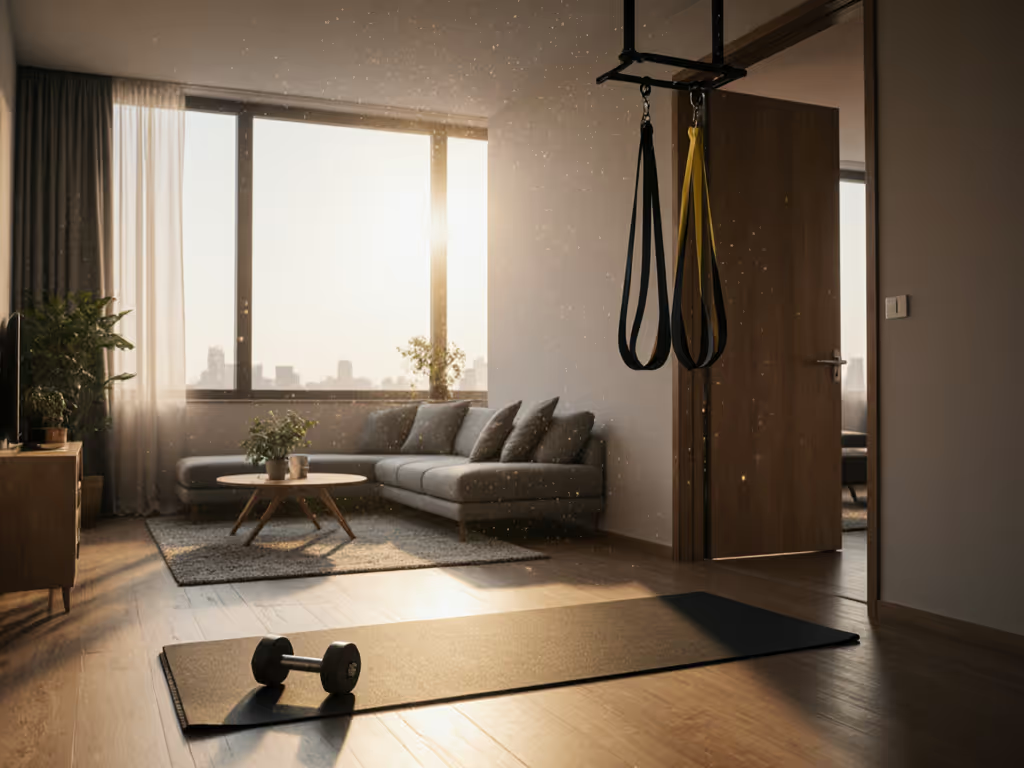
Start with the lowest-friction, highest-impact tools. For safe cardio with high blood pressure, this phase focuses on steady-state, low-impact movements that don't spike your heart rate dangerously and don't create impact noise.
Phase cost so far: $250-$350. Space used: roughly 4×6 feet if you're maximal. Noise profile: near-silent.
Why start here? Because consistency beats perfection. You're removing friction (no excuses about equipment arriving, no assembly dread, no neighbor anxiety). You're also testing your real schedule and recovery. Many people discover they'll actually show up for 30-minute sessions, not two-hour marathons. That data informs the next phase.
Once you've established a rhythm, layering in quiet strength equipment and home workout intensity monitoring tools protects your cardiovascular adaptation and lets you train with confidence.
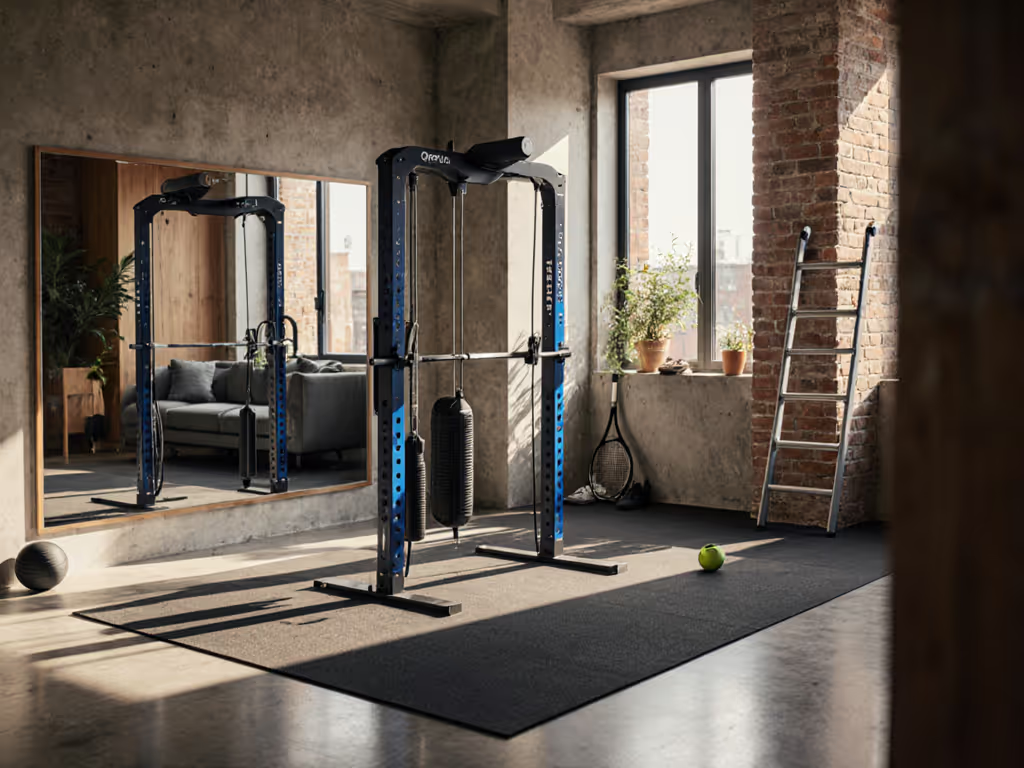
Phase cost: $600-$1000. Cumulative footprint: still under 100 square feet. Noise: cable glide is virtually inaudible compared to free-weight clanging.
This phase is where home gym blood pressure management shifts from hope to data. You're monitoring response, adjusting intensity safely, and building a modular foundation that can accept future attachments (belt squat, landmine, lever machines) without replacing the backbone.
Start lean, upgrade on schedule, avoid sunk-cost traps.
Once strength and monitoring are locked in, selective cardio equipment becomes a smart upgrade, not an impulse buy.
Phase cost: $1000-$2000. Cumulative investment from all phases: $1850-$3350. Space reclaim: rotating storage for resistance bands, compact cable routing, and a fold-flat mat means the room looks clean and ready for other uses (meetings, streaming, yoga).
Modular systems only work if they actually fit together. Before you buy, confirm:
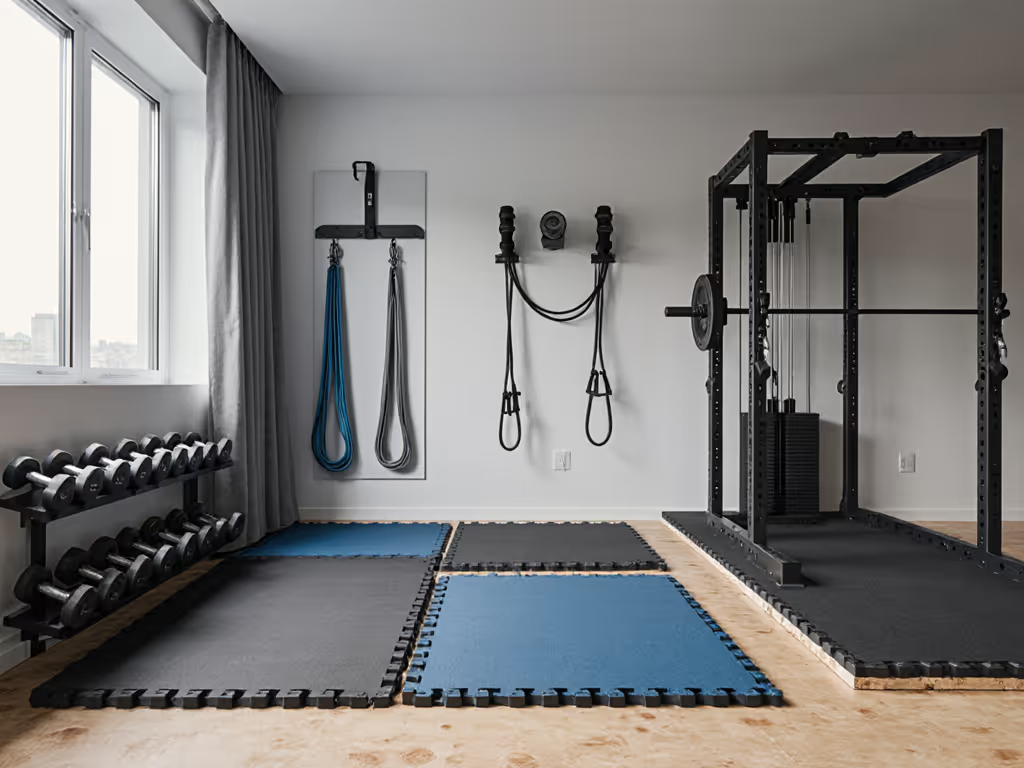
Beyond neighbor relations, a quiet training space reduces ambient stress. High blood pressure management is as psychological as it is physiological. Noise anxiety, guilt, and interruption all trigger sympathetic nervous system activation (the opposite of what you're training for). A silent resistance band set or whisper-quiet cable machine lets you enter flow state, lower cortisol, and train with full attention to breathing and form.
Consistent, moderate cardio paired with stress reduction yields better blood pressure outcomes than sporadic, high-intensity sessions. A phased home gym eliminates barriers to that consistency (no noise guilt, no space paralysis, no buyer's remorse derailing your routine).
The path forward is clearer when you think in stages instead of one overwhelming purchase. Audit your space: measure ceiling, floor, and wall studs. Track your current activity level over two weeks. Get a baseline BP reading. Then build your phase list:
Within each phase, prioritize compatibility and reversibility. Favor modular, used, or refurbished over new and bulky. Keep spreadsheet notes on costs, dimensions, and resale prices as you go. This becomes your decision-making anchor when temptation or feature creep strikes.
Roadmap, then checkout.
Your next step is measurement and testing. Use a decibel meter (smartphone apps exist, though a real meter costs under fifty dollars) to gauge your current space and test equipment noise before committing. Connect with communities focused on apartment strength training and hypertension-friendly workouts (online forums and fitness Discord servers are rich with data about quiet gear, phased builds, and vendor reliability). Ask cable manufacturers and trainer companies about trial periods or rental options for pricier machines; many accommodate serious buyers. And above all, work with your doctor to confirm that your training zone (measured by heart rate, BP response, and perceived exertion) actually matches your hypertension management goals.
Your home gym should support your health, not stress it. Quiet, modular, and phased is the way forward.